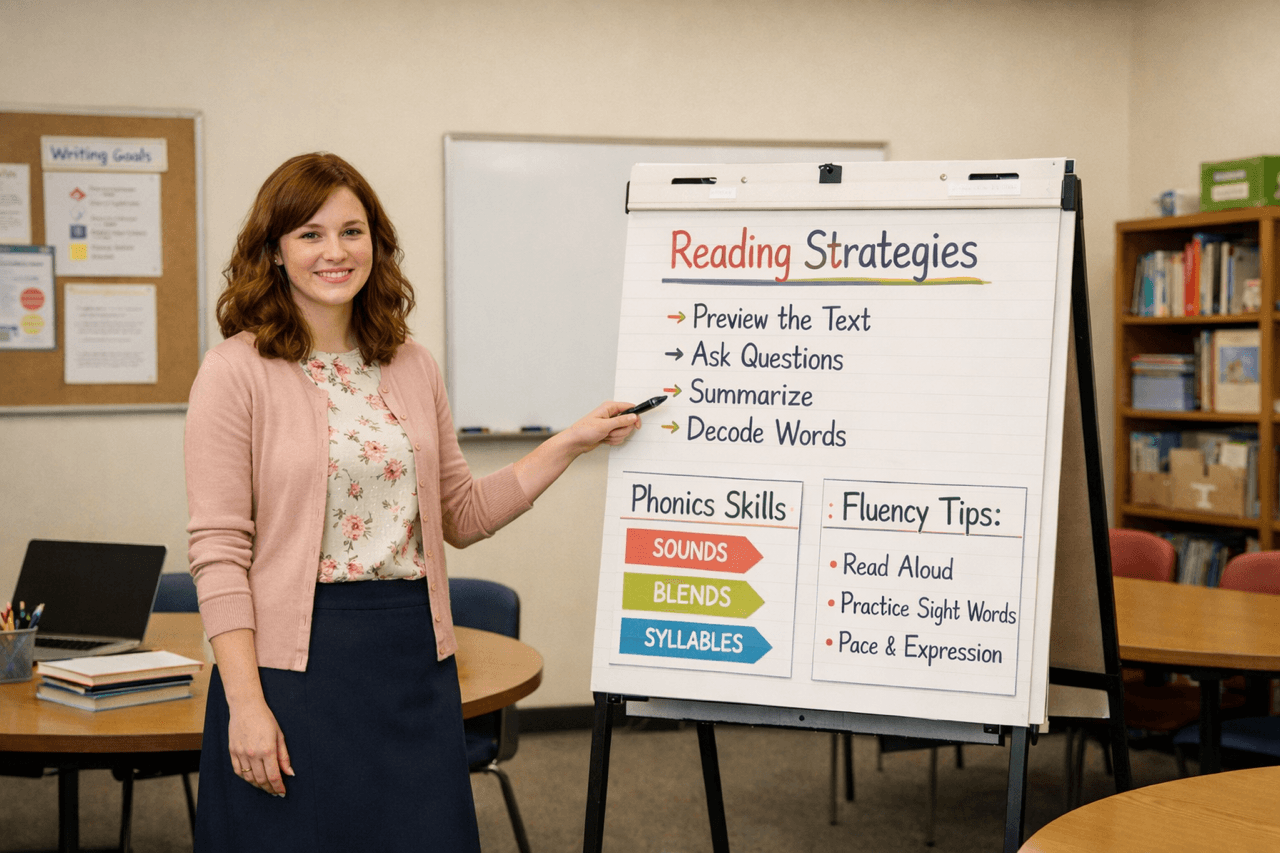
Reading Specialist / Literacy Coach

Transform Reading Skills
Unlock Student Confidence
Strengthen Academic Foundations
Undergraduate
Graduate
Post-Graduate
No degrees available
This is the educational pathway. There may be additional tests or licensure requirements necessary before begining to practice in the field. Consult your state guidelines for more. information.
Career Reality
Average Salary
The median annual wage for instructional coordinators, which includes literacy and reading specialists, was $74,620 in May 2024.
Job Market Demand
Employment of instructional coordinators is projected to grow about 2% from 2023 to 2033, with continued need for literacy support and academic intervention roles.
Work Environment
School-based setting, often working in small groups or one-on-one intervention environments within elementary or secondary schools.
Common Employers
Public school districts, private schools, charter schools, and specialized literacy or intervention programs.
Career Advancement
Progression into lead literacy specialist, instructional coach, curriculum leadership, or district-level academic roles.
Popular Titles
Core Areas of Impact
Is this career right for you?
What is the role of a reading specialist?
A reading specialist assesses students’ literacy abilities, designs intervention plans, and provides targeted instruction to improve reading skills.
What does a typical day look like?
Conducting reading assessments, delivering small-group or individual instruction, collaborating with classroom teachers, and monitoring student progress.
Where do reading specialists work?
Reading specialists work primarily in elementary and secondary schools within general education or special education support frameworks.
What are the common job titles and career paths?
Common roles include Reading Specialist, Literacy Coach, and Intervention Specialist, with pathways into curriculum leadership or instructional coordination.
Who is this career a good fit for?
This career suits experienced educators who are analytical, patient, and committed to improving student literacy outcomes.
What are the biggest rewards of this career?
Rewards include measurable improvement in student reading ability and meaningful academic impact.
What does long-term growth look like?
Long-term growth may include district literacy leadership, curriculum development, instructional coaching, or academic administration roles.
What is the educational pathway to become a reading specialist?
To become a reading specialist, you must first earn a valid teaching license and gain classroom teaching experience. Most states require candidates to be certified teachers before moving into reading specialist roles.
After initial certification and experience, you typically complete graduate level study in literacy, reading education, or a related field. A master’s degree provides advanced coursework in reading assessment, intervention strategies, and instructional methods.
In many states, you must also obtain a reading specialist endorsement or certification in addition to your teaching license. Requirements vary by state and often include specific graduate coursework, supervised practicum experience, and passing a state examination.
Sara Schenirer’s BA in Psychology with Special Education courses provides strong preparation for teacher certification and classroom experience, particularly in supporting diverse learners. The Master’s in Education and Special Education strengthens instructional expertise and literacy intervention skills that are essential for progression into reading specialist roles and state endorsement requirements.
The standard pathway is teaching certification, graduate literacy training, and reading specialist endorsement.